A brighter smile can boost confidence, but professional teeth whitening isn’t always affordable or convenient. That’s why at-home teeth whitening kits have become so popular. They offer an easy way to reduce stains from coffee, tea, red wine, smoking, and everyday foods without visiting a dental clinic.
However, not every whitening kit delivers the same results. Some work well for surface stains, while others target deeper discoloration. Choosing the wrong product may lead to disappointment or temporary tooth sensitivity.
This guide explains how at-home teeth whitening kits work, the different types available, which ingredients actually matter, and how to choose the right option based on your needs. You’ll also learn practical tips for getting better results while protecting your teeth.
Why Teeth Become Stained
Before buying a whitening kit, it’s helpful to understand why teeth lose their brightness.
There are two main types of stains.
Surface Stains
These develop on the outer enamel and are usually caused by:
- Coffee
- Tea
- Red wine
- Dark-colored soft drinks
- Smoking or tobacco
- Strongly pigmented foods
Surface stains often respond well to whitening strips, whitening toothpaste, or peroxide-based gels.
Deep Stains
Some discoloration happens inside the tooth rather than on the surface. Common causes include:
- Aging
- Certain medications
- Tooth injuries
- Excess fluoride during childhood
Deep stains usually require stronger whitening treatments and may take longer to improve.
How At-Home Teeth Whitening Kits Work
Most whitening kits use ingredients that break down stain molecules into smaller particles. This process makes teeth appear several shades lighter over time.
The whitening happens gradually. Most people notice improvement after several applications, while the full effect often appears after completing the recommended treatment period.
Results vary depending on:
- The cause of discoloration
- The whitening ingredient
- How consistently the product is used
- Your daily eating and drinking habits
Types of At-Home Teeth Whitening Kits
Different whitening systems suit different people. Understanding each type makes it easier to choose the right one.
Whitening strips are thin, flexible strips coated with whitening gel. They stick directly to your teeth for a set amount of time.
Best for:
- Mild to moderate stains
- First-time users
- Affordable whitening
Advantages
- Easy to apply
- Widely available
- Usually provide noticeable results within a couple of weeks
- Minimal preparation
Things to Consider
Because strips are flat, they may not fully cover uneven or crowded teeth.
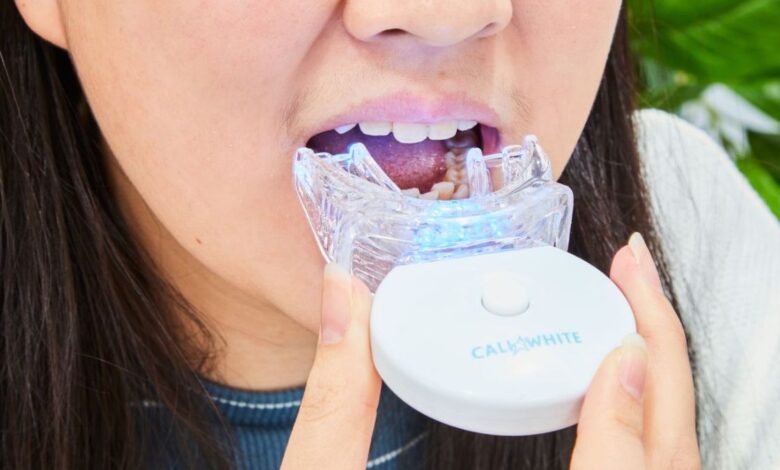
LED Whitening Kits
LED kits combine whitening gel with a small mouthpiece containing LED lights.
Many people believe the light performs the whitening, but in reality, the gel does most of the work. The LED mainly supports the treatment process depending on the product’s design.
Best for:
- People looking for a complete home whitening system
- Users who prefer guided treatments
Advantages
- Easy to use
- Comfortable for many users
- Often includes accessories like shade guides and storage cases
Whitening Trays
Tray systems use gel-filled trays that fit over your teeth.
Some trays are pre-filled, while others require you to add the whitening gel yourself.
Best for:
- Even whitening
- More complete tooth coverage
- Moderate to heavy staining
Advantages
- Better contact with teeth
- Consistent whitening
- Suitable for longer treatments
Whitening Pens
Whitening pens contain gel that you brush directly onto the teeth.
They are mainly designed for quick touch-ups rather than full whitening treatments.
Best for:
- Maintaining previous whitening results
- Travel
- Busy schedules
Whitening Toothpaste
Whitening toothpaste removes surface stains through gentle polishing ingredients.
Unlike peroxide-based kits, it cannot significantly change the natural color of your teeth.
Best for:
- Daily maintenance
- Preventing new stains
- Keeping whitening results longer
Understanding Whitening Ingredients
The ingredient matters more than the packaging.
Hydrogen Peroxide
Hydrogen peroxide is one of the most researched whitening ingredients.
It works by penetrating enamel and breaking apart stain molecules.
Benefits
- Fast results
- Clinically studied
- Effective for many common stains
Some users may experience temporary tooth sensitivity, especially if they already have sensitive teeth.
Carbamide Peroxide
Carbamide peroxide breaks down into hydrogen peroxide over time.
Because it releases more slowly, many people find it slightly gentler while still producing effective whitening.
It is commonly used in tray-based systems.
PAP (Peroxide-Free)
Some whitening kits use PAP instead of peroxide.
These products appeal to people who want to avoid peroxide-related sensitivity.
While many users report positive experiences, peroxide-based formulas generally have stronger long-term clinical evidence for whitening effectiveness.
How to Choose the Best At-Home Teeth Whitening Kit
The best whitening kit depends on your goals rather than simply buying the most expensive product.
Ask yourself a few questions first.
Do You Have Sensitive Teeth?
Choose products specifically designed for sensitive teeth.
These often contain lower peroxide concentrations or peroxide-free alternatives that reduce discomfort while still improving tooth color.
How Dark Are Your Stains?
Light yellow stains often improve with whitening strips.
Older or darker stains may require tray systems or stronger whitening gels used consistently over several weeks.
How Much Time Can You Spend?
If you only have a few minutes each day, whitening strips or pens may fit your routine better.
If you’re willing to spend more time for potentially more even coverage, trays are worth considering.
What’s Your Budget?
Whitening products range from inexpensive toothpaste to complete LED systems.
A higher price doesn’t always mean better results. Compare ingredients, treatment length, and customer feedback rather than focusing only on cost.
Common Mistakes That Reduce Whitening Results
Many people blame the product when the real problem is how it’s used.
Avoid these common mistakes:
- Skipping treatments
- Using products longer than instructed
- Drinking coffee immediately after whitening
- Smoking during treatment
- Expecting instant results
- Using multiple whitening products at the same time
Following the manufacturer’s instructions usually provides the safest and most consistent outcome.
Best At-Home Teeth Whitening Kits by Need
The best whitening kit depends on your teeth, lifestyle, and goals. Instead of choosing the most expensive option, look for a product designed for your specific situation.
Best for Sensitive Teeth
If your teeth become sensitive easily, avoid using strong whitening products every day. Look for kits that:
- Use lower peroxide concentrations
- Include desensitizing ingredients
- Recommend shorter treatment sessions
- Are clearly labeled for sensitive teeth
Start with fewer applications than the maximum recommended. If your teeth feel uncomfortable, take a short break before continuing.
Best for Coffee and Tea Stains
Coffee and tea stains usually build up slowly on the enamel. Peroxide-based strips or tray systems often remove these stains effectively when used consistently.
To keep your results longer:
- Rinse your mouth after drinking coffee or tea.
- Drink dark beverages through a straw when possible.
- Brush about 30 minutes after consuming acidic drinks.
Best for Smokers
Tobacco stains are often darker and more stubborn than food stains. A tray-based whitening kit may provide better coverage than strips, but results usually take longer. Quitting or reducing tobacco use also helps prevent new stains from forming.
Best for Quick Touch-Ups
If you’ve already whitened your teeth, a whitening pen is a convenient way to maintain your smile before a special event, interview, or vacation. It won’t replace a full treatment, but it can help refresh your appearance.
At-Home Whitening vs. Professional Whitening
Both methods can improve tooth color, but they differ in cost, convenience, and speed.
| At-Home Whitening | Professional Whitening |
|---|---|
| Lower cost | Higher cost |
| Convenient | Requires a dental visit |
| Gradual results | Faster results |
| Good for mild to moderate stains | Better for stubborn stains |
| Easy maintenance | Often supervised by a dentist |
If you have severe discoloration or dental concerns, professional treatment may be the better choice. For many people with everyday stains, a quality at-home kit provides satisfying results at a fraction of the cost.
How Long Do Whitening Results Last?
Results vary from person to person.
Many people enjoy a brighter smile for several months, while others maintain results for a year or longer with good oral care.
Your results depend on factors such as:
- Daily diet
- Smoking habits
- Oral hygiene
- Type of whitening treatment
- Frequency of maintenance
Regular brushing, flossing, and occasional touch-up treatments can help extend your results.
Tips for Better Whitening Results
Getting the best outcome isn’t just about choosing the right product. Good habits also matter.
- Brush and floss before each whitening session.
- Follow the instructions exactly.
- Complete the full treatment instead of stopping early.
- Avoid coffee, tea, red wine, and dark-colored foods for the first 24–48 hours after whitening.
- Stay hydrated to support a healthy mouth.
- Replace your toothbrush regularly.
- Continue routine dental checkups.
Small daily habits often make a bigger difference than switching products repeatedly.
Possible Side Effects
Most people use whitening kits without serious problems, but temporary side effects can occur.
Tooth Sensitivity
This is the most common complaint. Cold drinks or ice cream may feel uncomfortable for a few days after treatment.
If sensitivity develops:
- Take a short break between treatments.
- Use toothpaste designed for sensitive teeth.
- Don’t exceed the recommended treatment time.
Gum Irritation
Whitening gel can irritate gums if too much is applied or if it touches soft tissue.
Applying the product carefully usually prevents this issue.
Who Should Avoid Teeth Whitening Kits?
Whitening products aren’t suitable for everyone.
Talk to your dentist before whitening if you have:
- Untreated cavities
- Gum disease
- Cracked teeth
- Severe tooth sensitivity
- Dental pain
- Large fillings on front teeth
- Crowns, veneers, or bonding you expect to whiten (these materials do not change color)
Children and pregnant or breastfeeding individuals should seek professional advice before using whitening products.
Common Myths About Teeth Whitening
Myth: Whitening Damages Healthy Enamel
When used correctly, approved whitening products are generally considered safe for healthy teeth. Problems usually occur when products are overused or used incorrectly.
Myth: Teeth Can Stay White Forever
Whitening is not permanent. Daily habits gradually create new stains, so maintenance is necessary.
Myth: Whitening Toothpaste Can Change Tooth Color Completely
Whitening toothpaste mainly removes surface stains. It cannot dramatically lighten the natural shade of your teeth like peroxide-based treatments can.
Myth: More Gel Means Better Results
Using extra gel won’t make teeth whiten faster. Instead, it may increase gum irritation and tooth sensitivity.
How to Maintain a Brighter Smile
After whitening, protecting your results is easier than repeating the entire process.
Good habits include:
- Brush twice each day.
- Floss daily.
- Drink water after staining foods and beverages.
- Limit tobacco use.
- Visit your dentist for regular cleanings.
- Use whitening toothpaste a few times each week if recommended.
Consistency is more effective than frequent whitening treatments.
FAQs
Do at-home teeth whitening kits really work?
Yes. Quality whitening kits can noticeably reduce many common stains when used according to the instructions. Results vary depending on the cause and severity of discoloration.
How long does it take to see results?
Some people notice changes within a few days, while others need one to three weeks of regular use for more visible improvement.
Are LED whitening kits better than strips?
Not necessarily. The whitening gel is usually responsible for most of the results. Choose the type that best fits your comfort and routine.
Can whitening kits remove all stains?
No. Deep internal discoloration, crowns, veneers, and fillings usually won’t respond like natural teeth.
Will whitening make my teeth sensitive?
Some people experience temporary sensitivity, but it often improves after treatment ends. Choosing products made for sensitive teeth may help reduce discomfort.
Can I whiten my teeth every month?
Frequent whitening isn’t usually necessary. Follow the manufacturer’s recommendations and avoid excessive use.
Is whitening safe for enamel?
When used correctly and as directed, approved whitening products are generally considered safe for healthy teeth.
What’s the best age to use whitening kits?
Adults with healthy teeth and gums are generally the most suitable users. Younger individuals should seek advice from a dental professional before whitening.
Conclusion
The best at-home teeth whitening kit is the one that matches your needs, not simply the one with the highest price or the most advertising. Consider your level of staining, tooth sensitivity, budget, and preferred application method before making a choice.
For many people, whitening strips offer an affordable and simple solution for everyday stains. Tray systems provide more complete coverage, while whitening pens are useful for maintaining results. If you have sensitive teeth, choosing a gentler formula can help you brighten your smile more comfortably.
Remember that whitening works best when combined with good oral hygiene and healthy habits. Following the instructions, avoiding stain-causing foods immediately after treatment, and maintaining regular dental checkups will help your results last longer.
A brighter smile doesn’t happen overnight, but with realistic expectations and the right whitening kit, you can safely improve the appearance of your teeth from the comfort of your home.