Inside the TUI Flight BY6754 Emergency Landing: What Happened and How Passengers Were Safe

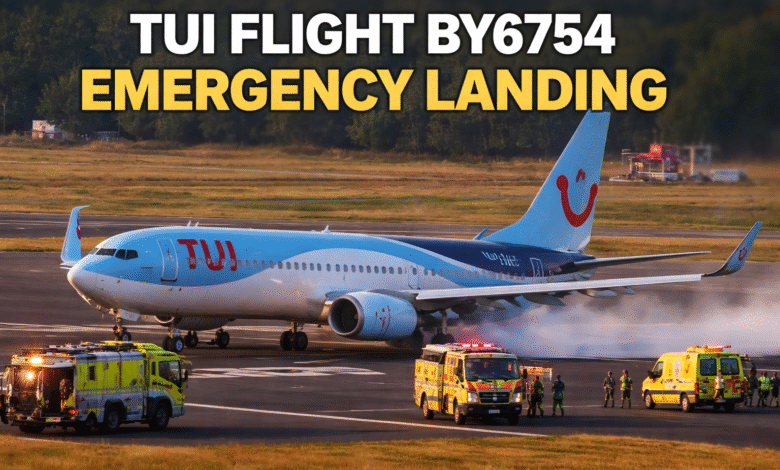
Air travel is generally safe, but emergencies can occur even on routine flights. One such incident involved TUI Flight BY6754, which required an emergency landing shortly after departing Cardiff Airport. Passengers and crew faced an unexpected challenge, yet thanks to swift action and strict aviation protocols, everyone landed safely. In this article, we explore the details of the TUI flight by6754 emergency landing, examine what happened onboard, and highlight the steps taken to ensure passenger safety.
Flight Details and Route
TUI Flight BY6754 was a scheduled holiday flight operated by TUI Airways, departing from Cardiff Airport in Wales and destined for Paphos International Airport in Cyprus. The aircraft was a Boeing 737-800, registered as G‑TAWY, a popular model for medium-haul flights thanks to its reliability and efficiency.
This particular route is frequently used by holidaymakers traveling to Mediterranean destinations. On the day of the incident, the flight took off in the late afternoon, carrying passengers eager to begin their vacation. The crew followed standard procedures during departure, but shortly after takeoff, an unforeseen problem arose that required immediate attention.
What Happened During the Flight
Just minutes after takeoff, the crew of TUI Flight BY6754 noticed a sudden issue with one of the engines. The problem was later identified as a bird strike, a situation where birds collide with an aircraft, often impacting the engine or windshield. This incident forced the pilots to declare an emergency using the aviation distress code squawk 7700, which alerts air traffic control to an urgent situation.
Following the declaration, the flight crew assessed the situation by circling over Swansea Bay. This maneuver allowed the aircraft to burn fuel and prepare for a safe emergency landing. Once confident that the situation was under control, the pilots decided to divert to Birmingham Airport, which was better equipped to handle an emergency landing. The diversion was executed flawlessly, showcasing the importance of pilot training and emergency procedures in ensuring passenger safety.
Passenger Experience and Reactions
For the passengers onboard, the emergency was alarming. Many reported hearing loud vibrations and unusual noises from the affected engine. Some passengers noticed a faint burning smell in the cabin, a common symptom of engine strain after a bird strike. Naturally, there was concern and anxiety, but the crew maintained calm and communicated effectively with passengers to explain the situation and prepare them for landing.
Despite the tense circumstances, there were no injuries. Passengers later praised the professionalism of the flight attendants and pilots, who managed to maintain composure throughout the emergency. The safe landing of TUI Flight BY6754 demonstrated the effectiveness of airline safety protocols and reassured travelers about the overall safety of commercial aviation.
Understanding fivebpeol: Meaning, Purpose, and Why People Are Searching for It
Emergency Response and Aviation Protocols
The successful emergency landing was a result of coordinated efforts between the pilots, air traffic control, and airport emergency services. As soon as the emergency was declared, Birmingham Airport temporarily suspended other operations to clear the runway and mobilize fire and rescue teams.
Air traffic control guided the aircraft safely to its diversion airport, monitoring altitude, speed, and fuel levels. Emergency services were strategically positioned on the runway to respond immediately if needed. This level of preparedness reflects the rigorous safety standards that airlines and airports maintain to handle emergencies like the TUI flight by6754 emergency landing.
Cause and Investigation
Bird strikes are a recognized risk in aviation and can occur during takeoff, landing, or low-altitude flight near airports. In the case of TUI Flight BY6754, birds collided with the engine shortly after takeoff, leading to the temporary loss of engine performance.
Following the landing, TUI Airways, along with aviation authorities, conducted a thorough inspection of the aircraft. Investigations confirmed that the engine damage was consistent with a bird strike, and all safety protocols had been properly followed by the crew. The incident serves as a reminder of the importance of wildlife management near airports and continuous training for pilots to handle unexpected events.
Impact on Flights and Travelers
While the emergency landing caused temporary disruption to airport operations, the overall impact on travelers was minimal. Other flights were delayed slightly to accommodate the emergency landing, but airport authorities managed the situation efficiently.
For passengers on TUI Flight BY6754, the incident was undoubtedly stressful, yet the experience reinforced confidence in airline safety measures. The crew’s professionalism, combined with proper airport coordination, ensured that everyone arrived safely, highlighting the reliability of commercial aviation even under challenging circumstances.
Lessons Learned from the Incident
The TUI flight by6754 emergency landing provides valuable insights into airline safety. First, it underscores the importance of pilot training, as the crew’s ability to assess the situation and execute a diversion prevented potential injuries. Second, it highlights the significance of airport emergency preparedness, from firefighting teams to air traffic coordination. Finally, it brings attention to the ongoing challenge of bird strikes, prompting airports and airlines to implement measures to reduce wildlife hazards near flight paths.
Conclusion
The TUI flight by6754 emergency landing stands as an example of how effective aviation protocols and trained personnel ensure passenger safety during unforeseen events. Although the incident caused brief anxiety for travelers, the professionalism of the crew, combined with swift emergency response, resulted in a safe outcome. Passengers were unharmed, operations were managed efficiently, and aviation authorities gained further insight into handling bird strike emergencies. This event reinforces the fact that modern air travel remains highly safe, even when emergencies arise.
FAQs
1. Why did TUI Flight BY6754 make an emergency landing?
The flight experienced a bird strike affecting one of its engines shortly after takeoff, prompting a diversion for safety.
2. Were any passengers injured on TUI Flight BY6754?
No, all passengers and crew members landed safely without injuries.
3. What type of aircraft was TUI Flight BY6754?
It was a Boeing 737-800, a medium-haul aircraft used widely by TUI Airways.
4. Where did TUI Flight BY6754 land safely?
The aircraft diverted from its original destination and landed safely at Birmingham Airport.
5. How do airlines handle emergencies like this?
Airlines follow strict protocols, including pilot assessment, emergency declarations, air traffic control coordination, and airport emergency services readiness.