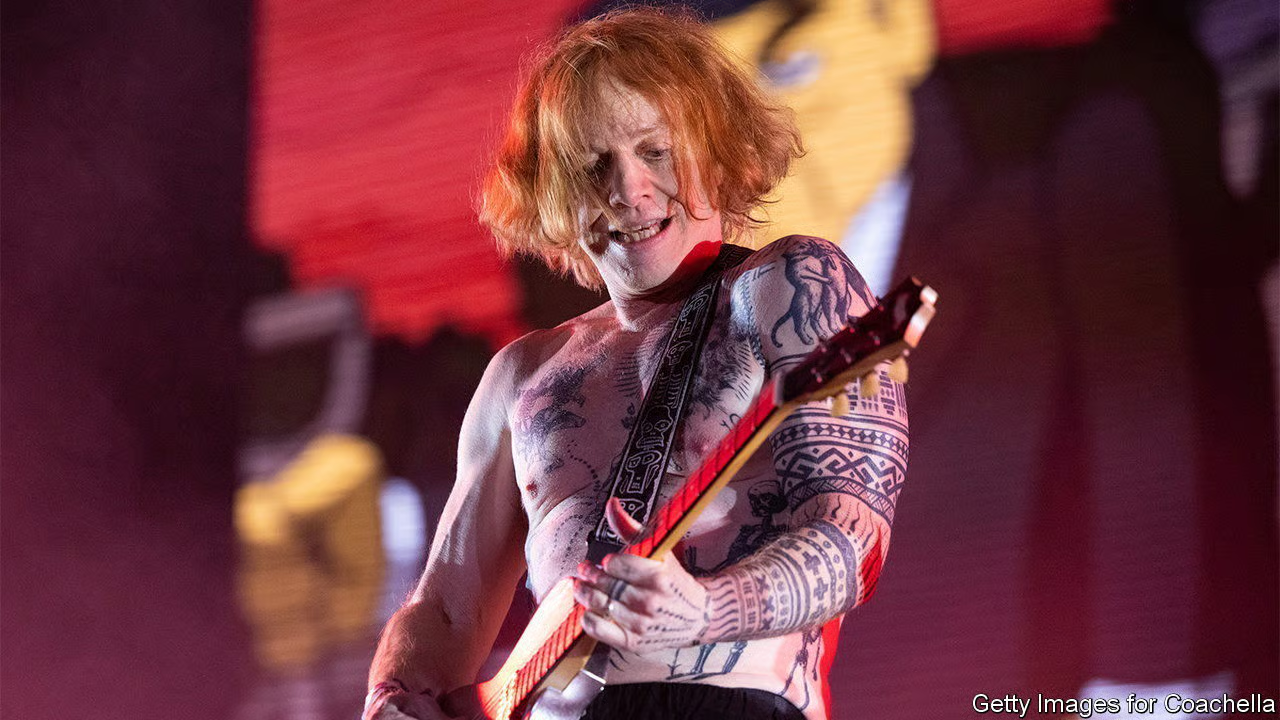
Danny Elfman is widely known as one of the most influential composers of our time, but his journey in music began long before he scored iconic films. Long before he became the go-to composer for Tim Burton, Elfman was leading a band that would leave a lasting impact on alternative music and the new wave scene. The story of the Danny Elfman band is one of creativity, experimentation, and musical innovation that has influenced generations of artists.
The Early Days: From Theatre to Music
Before forming his iconic band, Danny Elfman started his career in a theatrical ensemble called The Mystic Knights of the Oingo Boingo. Founded in the early 1970s, this group combined surrealist theater, street performance, and music. Elfman joined the group as a teenager and quickly became a central figure, eventually taking over leadership in 1976. The ensemble performed a wide range of music, including 1920s and 1930s jazz, classical-inspired pieces, and original compositions, often incorporating unusual instruments and whimsical stage antics.
This early experience gave Elfman a unique approach to performance and composition. The theatrical nature of the group allowed him to experiment with musical storytelling, layering complex rhythms and harmonies that would later define the sound of his band.
Formation of Oingo Boingo
By 1979, Elfman decided to transform The Mystic Knights into a more conventional rock and new wave band. This transition marked the official formation of the Danny Elfman band, known as Oingo Boingo. Unlike its theatrical predecessor, Oingo Boingo focused on a tighter ensemble with a rock-oriented sound, while still retaining some of the eclectic and experimental qualities from Elfman’s theatrical roots.
The band blended ska, punk, and new wave elements with Elfman’s signature quirky style. With energetic live performances, unusual time signatures, and a willingness to push musical boundaries, the Danny Elfman band quickly gained attention for its originality.
Musical Style and Influence
The Danny Elfman band was never confined to a single genre. Their music featured a unique mix of rock, ska, jazz, and theatrical elements. Elfman’s background in the Mystic Knights heavily influenced this style, giving the band a distinct sound that stood out in the early 1980s music scene.
Elfman’s songwriting often explored dark humor, social commentary, and imaginative storytelling. Songs like “Weird Science” and “Dead Man’s Party” showcased his ability to combine catchy hooks with unconventional musical structures. This distinctive sound helped the Danny Elfman band cultivate a loyal fanbase, and their live shows became legendary for their energy and theatricality.
Discography and Key Albums
The Danny Elfman band released a series of albums that remain influential today. Their debut studio album, Only a Lad (1981), introduced audiences to Elfman’s complex, energetic style. This was followed by albums such as Nothing to Fear (1982) and Good for Your Soul (1983), which further developed their unique blend of new wave and ska.
The 1985 album Dead Man’s Party became a commercial breakthrough, featuring hits like the title track and “Weird Science,” which was tied to the popular movie of the same name. These songs captured the band’s signature mix of dark humor, catchy melodies, and experimental arrangements, solidifying the Danny Elfman band as a defining act of the new wave era.
Their later albums, including Boi-ngo (1987) and Dark at the End of the Tunnel (1990), showcased the band’s continued evolution and Elfman’s growth as a songwriter and performer. Each record combined complex instrumentation with a theatrical sensibility that reflected Elfman’s early musical training.
Transition to Film and Solo Work
While the Danny Elfman band thrived in the 1980s, Elfman’s career began to shift toward composing for film and television. His work with director Tim Burton on Pee-wee’s Big Adventure (1985) marked the beginning of a prolific partnership that would define much of Elfman’s career.
Despite moving into film scoring, Elfman continued to release music outside of movies. His 1984 solo album So-Lo included contributions from band members and reflected his interest in exploring new musical directions. After Oingo Boingo disbanded in 1995, Elfman focused almost entirely on composition for media while occasionally revisiting his rock roots with solo projects like Big Mess (2020).
Legacy of the Danny Elfman Band
The impact of the Danny Elfman band extends far beyond the charts. The band’s eclectic style, theatrical performance, and genre-blending sound influenced many alternative and experimental artists. Their music remains celebrated for its creativity, humor, and originality.
Even after disbanding, the legacy of the Danny Elfman band continues to inspire both fans and musicians. Their unique approach to songwriting, combining theatricality with new wave energy, set a standard for innovative music that pushes boundaries while remaining accessible.
Conclusion
The story of the Danny Elfman band is a testament to the power of creativity and experimentation in music. From its theatrical beginnings in the Mystic Knights to the energetic, genre-defying sound of Oingo Boingo, the band left a lasting mark on the music world. Danny Elfman’s ability to blend humor, theatricality, and musical sophistication helped him build a career that seamlessly transitioned from band frontman to iconic composer. Today, the influence of the Danny Elfman band is evident in countless artists and remains a vibrant part of music history.
FAQs
1. What is the Danny Elfman band best known for?
The band is best known for its energetic performances, quirky style, and hits like “Dead Man’s Party” and “Weird Science.”
2. When was the Danny Elfman band formed?
The band, Oingo Boingo, officially formed in 1979 after transforming the theatrical group, The Mystic Knights of the Oingo Boingo.
3. Did Danny Elfman continue making music after the band disbanded?
Yes, he focused on film and TV scores and released solo albums, including Big Mess in 2020.
4. What musical styles influenced the Danny Elfman band?
The band combined new wave, ska, punk, jazz, and theatrical elements from Elfman’s early career in the Mystic Knights.
5. Why is the Danny Elfman band considered influential?
Their unique style, genre-blending sound, and theatrical performances inspired alternative artists and shaped the new wave era.